Åsa Sonjasdotter is an artist, researcher, and writer who lives on the island of Ven, Sweden, and in Berlin. Her work explores the social, political, and cultural relationships surrounding cultivated plants, agriculture, and food systems. Her practice is informed by her experience of the industrialized agricultural landscapes of southern Scandinavia and her long-standing engagement with peasant knowledge and agroecological practices. In 2024, she received her PhD in artistic practice from HDK-Valand at the University of Gothenburg with the dissertation Towards Peasant Cultivation of Abundance.
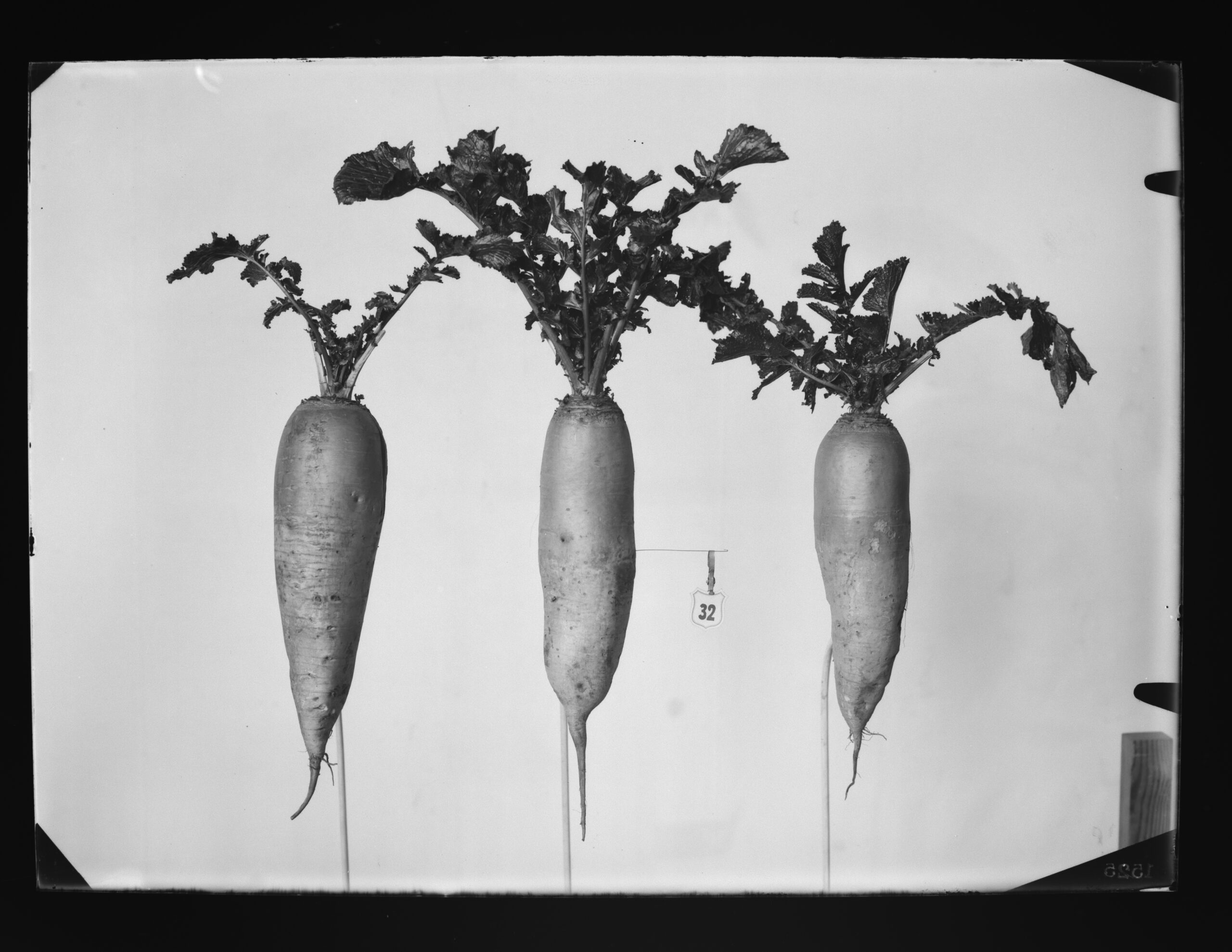
This project examines the historical connection between fascist ideology and the development of lens-based technologies of film and photography within breeding programs towards uniform life forms. It traces the historical beginnings of Swedish and German institutes for plant breeding, and their precursory role for the establishment of institutes for eugenics. Though national breeding and distribution programs have been thoroughly researched (Saraiva 2016; Bonneuil and Thomas 2010), visual representations of purified life forms invented at these institutes are less studied, despite their driving role in shaping the vision of purified life. The study of such representations opens historical time for critical fabulation (Hartman, 2008) towards possible other paths for sensory and social relations of breeding and cultivation in landscapes today marked by uniform life.

