Fellowship · 17.09.2025 – 21.09.2025

Training Creative Acts and Action – Participants

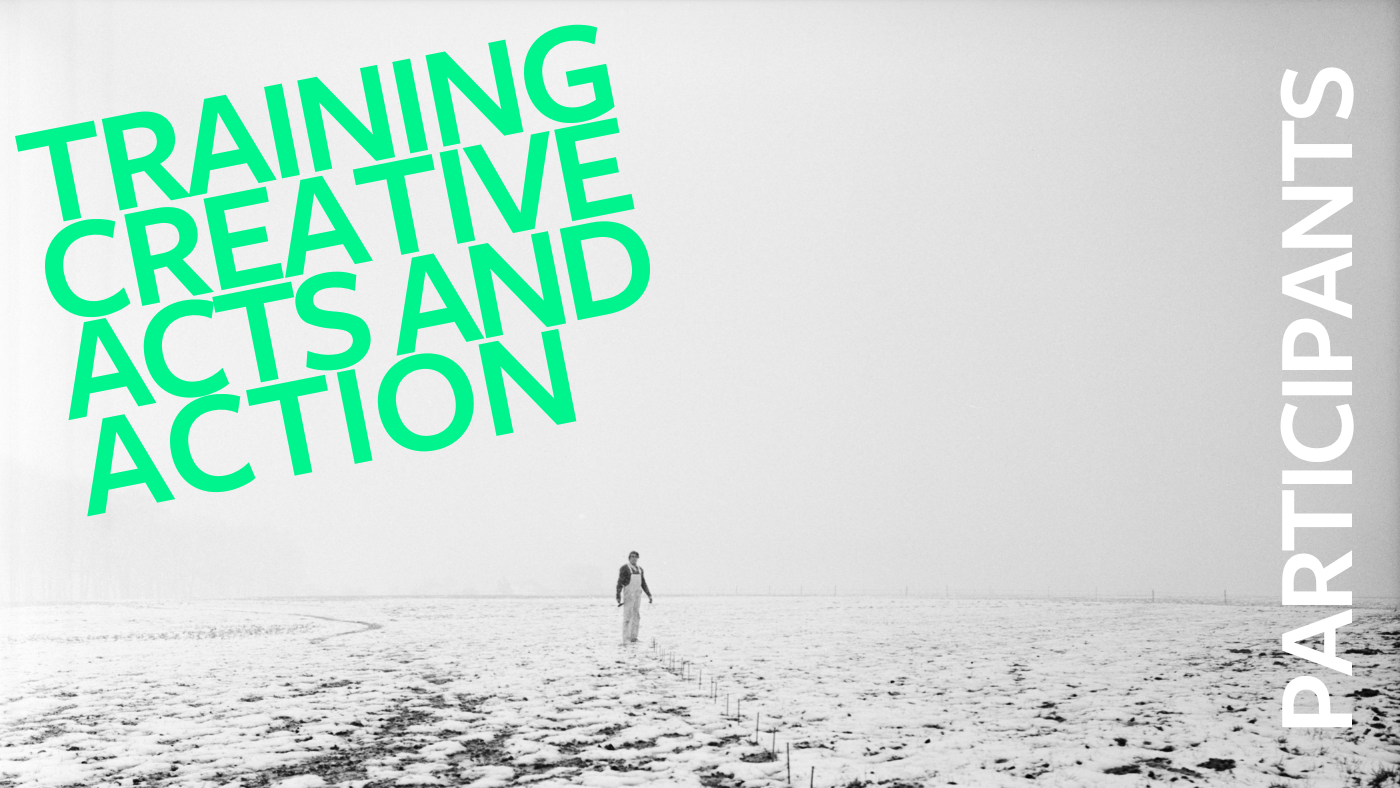
Günther Uecker: Nagelfeldzug, 1969. Photograph by Lothar Wolleh, image cropped and overlaid with text by GUI | IUG. Günther Uecker © VG Bild-Kunst, Bonn 2025; Lothar Wolleh © Lothar Wolleh Estate, Berlin

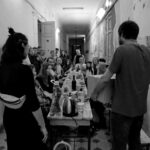
The GUI | IUG enabled 15 young scholars and artists to participate in the international and interdisciplinary research project Training Creative Acts and Action. Following a public call for applications, participants applied with their own research proposals for one of the workshop’s five panels. The funding provided by our institute facilitated a five-day intensive research and working residency for the selected participants, with our institute covering all associated costs.

Participants
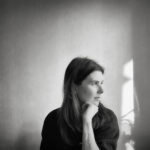
Stephanie Dvareckas

Stephanie R. Dvareckas is a Ph.D. Candidate in Art History at Rutgers University. She is a Dodge Avenir Fellow at the Zimmerli Art Museum where she works with the Norton and Nancy Dodge Collection of Nonconformist Art from the Soviet Union. Her work is supported by a fellowship from the Fulbright Scholars Program (Kazakhstan, 2022-23), a Foreign Languages and Area Studies (FLAS) Fellowship from Harvard University’s Davis Center (2019), and a Graduate Dean Professional Development Award (2018). Stephanie holds an MA in Art History, Theory, and Criticism from the School of the Art Institute of Chicago and a BFA from the Massachusetts College of Art and Design.
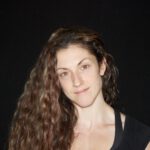

Isa Fontbona

Isa Fontbona is a performance artist, academic researcher, and bodybuilder. Her career focuses on using the body as a creative material to stimulate critical thought on issues that affect us as individuals in post/hypermodern society. Her works challenge the limits of her body, employing physical effort to penetrate the audience.

Marie Götze

Marie Götze works with industrial traces accumulating in more-than-human bodies as touching, contaminating & transforming guises. Her installative, performative, conceptual & textile art practice connects within underground networks, merging nourishing, extractive & resisting tendencies.

Alex Gross

Alex Gross, visual artist and PhD in art theory, has been working at the Chair of Visual Arts, Institute of Architecture at TU Berlin since 2010. His artistic practice focuses on destabilising material processes as key agents in sculptural and performative interventions. At the Institute of Architecture, he develops and implements experimental teaching formats that focus on material-based artistic research and performative inquiry.

Anna Helfer

Anna Helfer is a Ph.D. candidate in Social and Cultural Anthropology at Freie Universität Berlin and the Leibniz-Zentrum Moderner Orient (ZMO). Her research focuses on art, memory, and postcolonial critique, and she has been conducting fieldwork in Dakar since 2018. From March 2024 to February 2025, she was a research associate at the Department of African Art at the Art History Institute of Freie Universität Berlin. Since 2023, she has been a member of the project Re-connecting “Objects” (TU Berlin), which was presented at Dak’Art 2024. From 2015 to 2017, she worked on the Café Deutschland oral history project at the Städel Museum, conducting interviews with key figures of the postwar German art scene. She currently teaches at the Institute of African Art at Freie Universität Berlin and holds a doctoral fellowship from the Friedrich Ebert Foundation.

Johanne Mohs

Johanne Mohs studied Romance languages and literatures, art history and journalism at the University of Hamburg and the University of Barcelona. From 2007 to 2010 she held seminars on French and Spanish literature at the University of Hamburg and since 2010 she works first as a doctoral candidate and than as a postdoctoral researcher at the Bern University of the Arts. Since 2020 she works as an independent researcher with institutions like the Hamburger Kunsthalle, the Kunstmuseum Olten or the Literaturhaus Berlin and as a lecturer at the Technische Universität Berlin. Her research interests include intermediality between literature and photography, poetics of European Avant-gardes (especially Tel Quel and OuLiPo), material aesthetics, collaborative writing cultures, and the interplay of art/literature, technology and science.

Cyrill Lim and Daria Nedelcu

Cyrill Lim, a multimedia artist and researcher, and Daria Nedelcu, an emerging curator and art historian, began collaborating in 2022. Their joint practice intersects art, research and social engagement.

Nina Nielebock

Nina Nielebock is an artist specializing in sculpture and performance in public space. In her art, she deals with contemporary politics and explores their impact on society in participatory performances. She studies under Sam Durant at the Stuttgart State Academy of Art and Design. Nina Nielebock also works as an art educator, organizes discussions at the interface of art and politics and organizes group exhibitions.

Peter Seeland

Peter Seeland is a Master’s student in Art History at LMU Munich. His research focuses on ecological and ecocritical perspectives in the history of art and conteporary art, with an emphasis on visual culture, landscape, and historical resource relations.

Verena Straub

Verena Straub is an art and image historian at TU Dresden. Her research focuses on contemporary art, images in the context of political agitation and online visual culture. She is co-leader of the research project Image Protests on Social Media and a cofounder of the Affect and Colonialism Web Lab.

Irène Unholz

Irène Unholz is a PhD student at the University of Fribourg (CH), investigating strategies of simulating and reproducing systems in contemporary art. She studied Art History, Media Research, and Psychology at the University of Fribourg and FU Berlin. Alongside, she contributes as a cultural journalist.